
🌿 Facial Oil Serum Formulation Guide
Why this guide works: Most beginners struggle with choosing the right oils, understanding absorption, balancing actives, and avoiding greasy or unstable formulas. This guide solves all of that with clear, science-backed explanations and 15 pro-level recipes that show you exactly how oil serums are designed in real labs.
This oil-based serum formulation guide is a 163-page training in designing high-performance facial oil serums from real cosmetic science. The perfect entry point for new formulators because anhydrous systems skip the complexity of preservatives, emulsion stability and water phase chemistry.
⚠️ Read first: This is a formulation training, not a copy-paste recipe collection. You will learn the chemistry to design your own serums, with 15 complete working formulas included as professional starting points.
✦ 15 Complete Professional Formulas
Every formula includes full INCI names, usage rates, and step-by-step method:
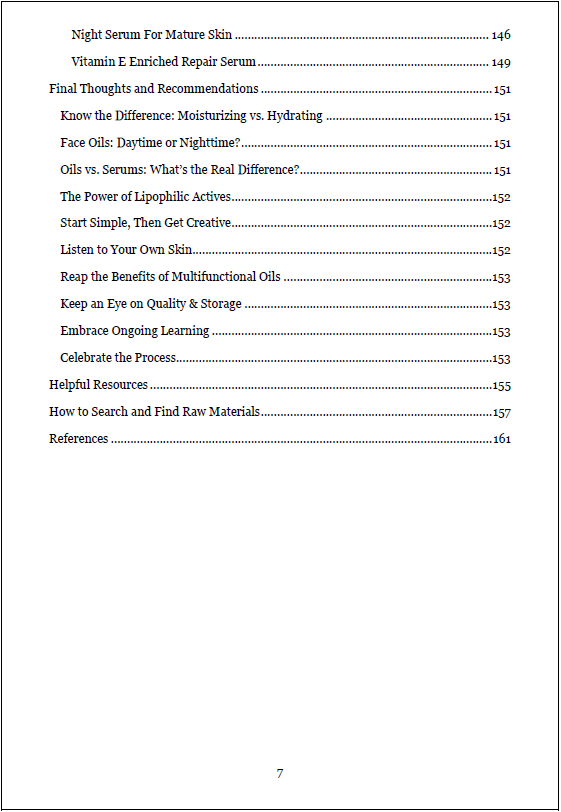
- Basic Oil-Based Face Serum (Anti-Aging & Spot Reducing)
- Ageless Eye Elixir
- Coenzyme Q10 Eye Serum
- Glow Essence Facial Oil
- Radiant Glow Facial Oil with Vitamin C
- Luminescent Renewal Facial Oil
- Radiant Revival Facial Oil
- Serene Glow Facial Oil
- Radiant Citrus Energy Serum
- Ceramide Shield Serum
- Radiant Vitality Antioxidant Serum
- Calming Harmony Facial Serum
- Revitalizing Vitamin Booster
- Night Serum For Mature Skin
- Vitamin E Enriched Repair Serum
Two dedicated eye serum formulas, multiple anti-aging options, brightening serums with Vitamin C, ceramide barrier support, and night care for mature skin. Each formula is built around proven oil-soluble actives.
🧠 Who is this guide for?
Whether you are a total beginner, a DIY skincare creator, or an indie brand formulator, this guide is for you if you want to:
- Understand the science behind oil-based serums
- Choose the right oils for acne, aging, dryness, or sensitivity
- Go beyond simple mixing and start formulating with intention
- Avoid common beginner mistakes
- Save time, money, and resources by learning how pros do it
💡 What You Will Learn
- Why anhydrous (waterless) serums are the best starting point: no preservatives needed, fewer stability variables, focus stays on actives
- Skin science: structure, lipids, NMFs, acid mantle, microbiome
- Skin types in depth: dry, oily, normal, combination, sensitive, and mature
- GMP (Good Manufacturing Practices) for indie production
- Botanical carrier oils:
- 7 skin-type guides (oily, dry, combination, sensitive, anti-aging, hyperpigmentation, delicate eye area)
- Fatty acids 101 and how they affect skin function
- Comedogenicity, absorption rates, and oil polarity
- Heat stability and iodine value
- Essential oils:
- Selection, dermal limits, dilution guidelines, usage rate calculations
- Essential oil chemistry: monoterpenes, esters, oxides, and major chemical families
- 7 skin-concern guides (oily, dry, combination, sensitive, anti-aging, dark spots, eye area)
- Safety notes: pregnancy, phototoxicity, and irritation risks
- Vitamin E: tocopherols, tocotrienols, antioxidant function, stability enhancement
- Oil-soluble active ingredients in depth:
- Retinol, Coenzyme Q10, Astaxanthin, Squalane
- Bakuchiol, Ceramides, Bisabolol, Chamazulene
- Oil-soluble Vitamin C derivatives
- Oil-soluble plant extracts and botanical CO2 extracts
- Quick reference table for active selection and combination
- Natural silicone alternatives for lightweight, non-greasy texture
- How to buy natural ingredients: suppliers, INCI names, COA, MSDS, certifications (USDA Organic, Cosmos, Ecocert, NaTrue)
- Final thoughts: moisturizing vs hydrating, day vs night use, oils vs serums, lipophilic active strategy, quality and storage
Updated August 2025: Improved Vitamin E section for clarity.
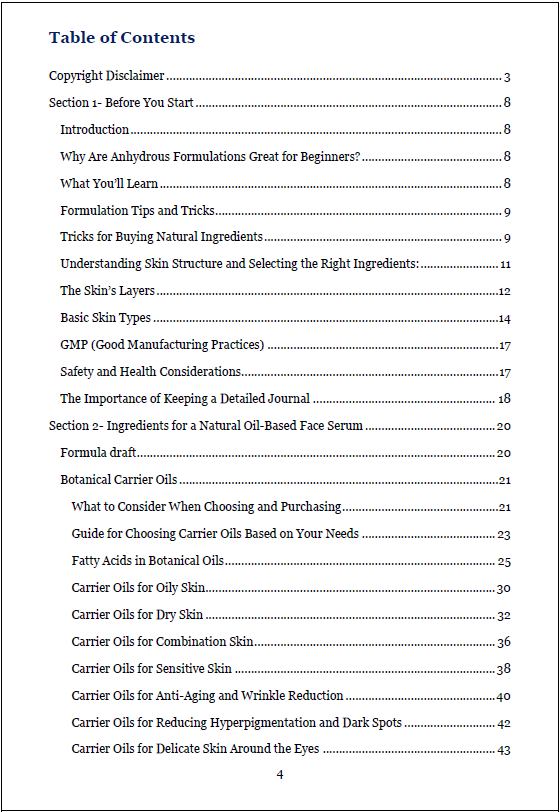
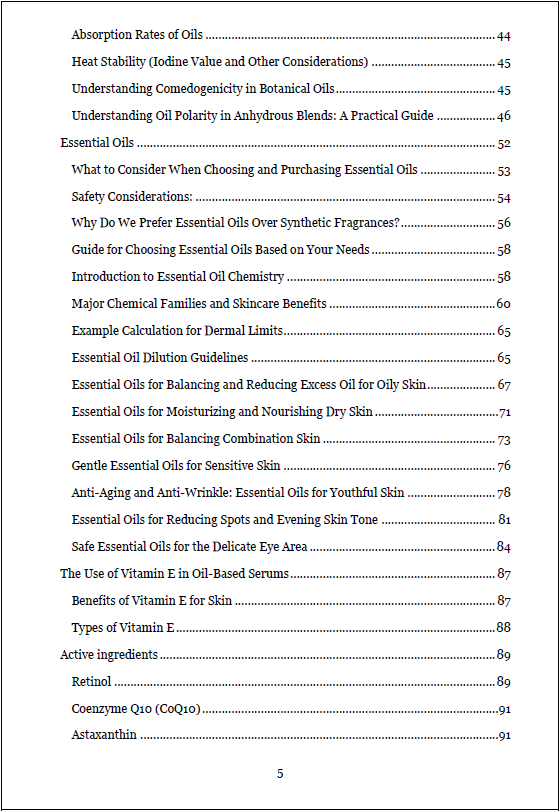
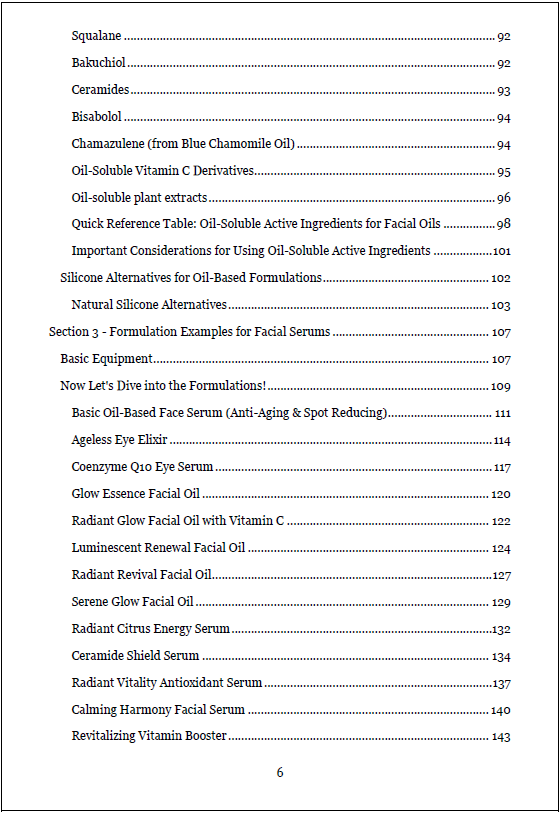
📖 Full Table of Contents
📌 Section 1. Before You Start
Introduction: Why oil-based serums are great for beginners
What you will learn, formulation tips, and common ingredient pitfalls
How to buy raw materials and understand skin structure
GMP, safety notes, and formulation journaling
🧪 Section 2. Ingredients for Oil-Based Serum Formulation
Botanical Carrier Oils
✓ How to choose based on skin type (oily, dry, combo, sensitive, mature)
✓ Fatty acid composition and skin function
✓ Comedogenicity and absorption rates
✓ Oil polarity in blends: how to balance light vs heavy oils
✓ Heat stability and shelf-life considerations
✓ Compatibility of oils with actives and essential oils
✓ Ingredient substitution tips for customization
Essential Oils
✓ How to select safe and effective essential oils for facial use
✓ Dermal limits, dilution guidelines, and usage rates
✓ Chemical families: monoterpenes, esters, oxides
✓ Choosing essential oils for acne, wrinkles, pigmentation, eye area and more
✓ Safety notes: pregnancy, phototoxicity, and irritation risks
Vitamin E
✓ Why it is used in oil-based serums
✓ Types of tocopherols and tocotrienols
✓ How it acts as a natural antioxidant and stability enhancer
Oil-Soluble Active Ingredients
✓ Coenzyme Q10, Bakuchiol, Retinol, Squalane, Ceramides, Bisabolol
✓ Oil-soluble Vitamin C derivatives
✓ Astaxanthin and Chamazulene
✓ How to calculate usage rates and combine safely
Oil-Soluble Extracts and Antioxidants
✓ Using plant-based extracts in anhydrous systems
✓ How to incorporate botanical CO2 extracts
✓ Boosting antioxidant power naturally
Formulation Resources
✓ Quick reference tables for carrier oils, essential oils, and actives
✓ Ingredient substitutions
✓ Storage conditions for raw materials and finished serums
Texture and Sensory Optimization
✓ Natural silicone alternatives for lightweight feel
✓ Tips for avoiding greasy finish and improving spreadability
🧴 Section 3. 15 Oil-Based Serum Formulations for Every Skin Type
Recipes for every skin need: anti-aging, acne-prone, hyperpigmentation, sensitive skin, eye area and more
Includes INCI names, ingredient functions, usage rates, and step-by-step method
Moisturizing vs hydrating: what is the difference
Oils vs serums: key distinctions explained
How to layer your skincare
Troubleshooting, shelf-life, storage tips, and scaling batches
Beginner glossary, helpful resources, and ingredient supplier tips
✨ Why SwonLab?
This guide was created by a chemical engineer specialized in cosmetic formulation; no fluff, no copy-paste recipes, just real science simplified for real people.
Whether you are making a serum for yourself or starting your indie skincare line, this eBook will guide you every step of the way with:
- ✔️ Clear explanations
- ✔️ Research-backed guidance
- ✔️ Flexible, customizable recipes
- ✔️ No unnecessary jargon
🛒 Ready to start formulating?
Download instantly after purchase and get lifetime access.
Start creating oil-based serums that actually perform, not just feel nice.



LauraM. –
Very well structured and thoughtfully written. It’s not just recipes, it teaches how to think like a formulator. I’ve already adjusted a few of my existing formulas using this guide.
Nicky –
Thank you ! Just what I was looking for & more !!
Illy –
Everything it says it is, a fantastic purchase!
Selina –
Wonderful resource…clearly. laid out easy to follow. Just what i needed and will return to it time and time again. Love formulas and excited to try out the eye oils..
Rachel –
This is a great resource!
Chloe –
Honestly better than I expected. It’s quite detailed but still easy to follow. I learned a lot.