
A working reference for formulators who are tired of marketing-driven ingredient lists and want to make defensible technical decisions instead.
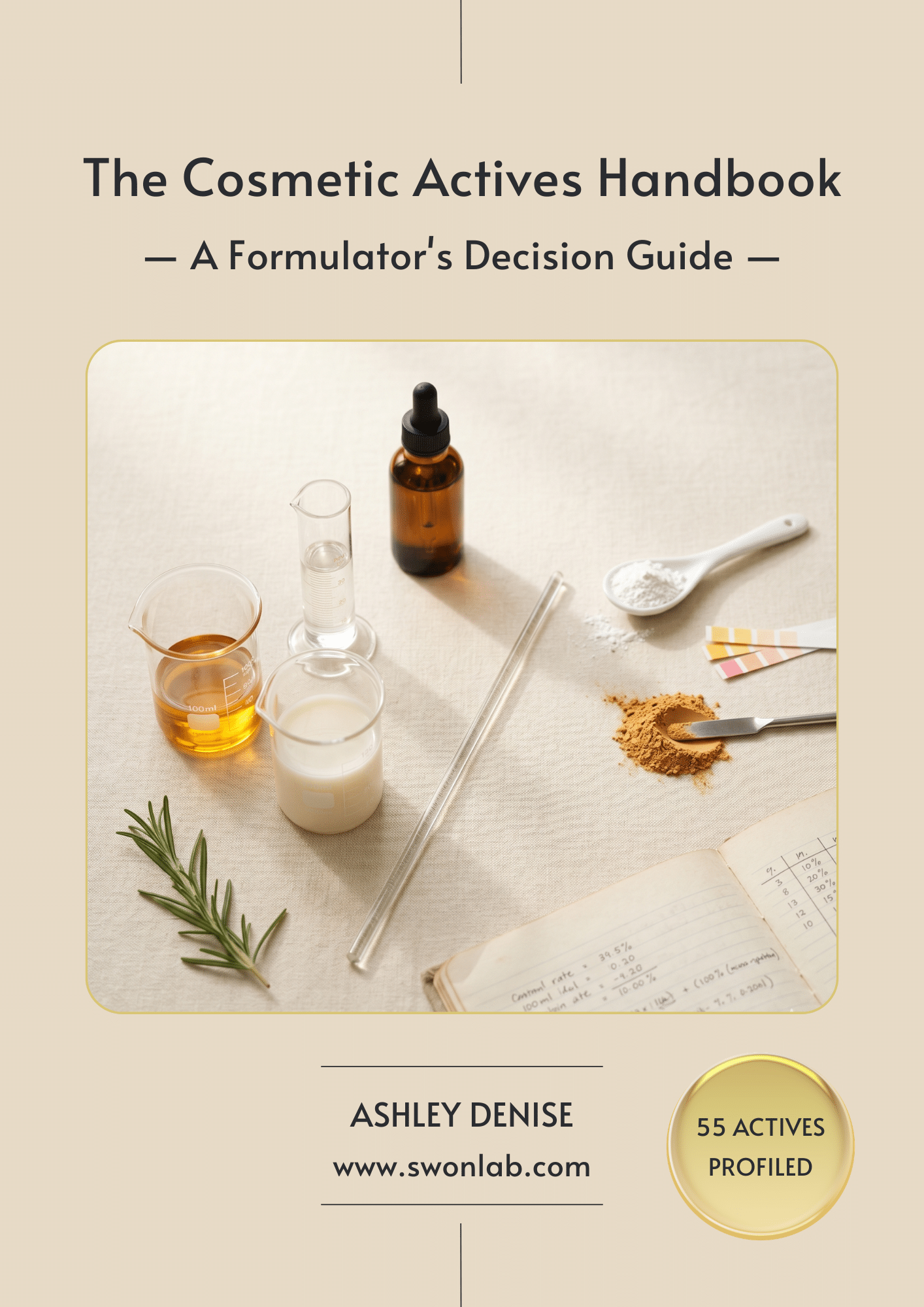
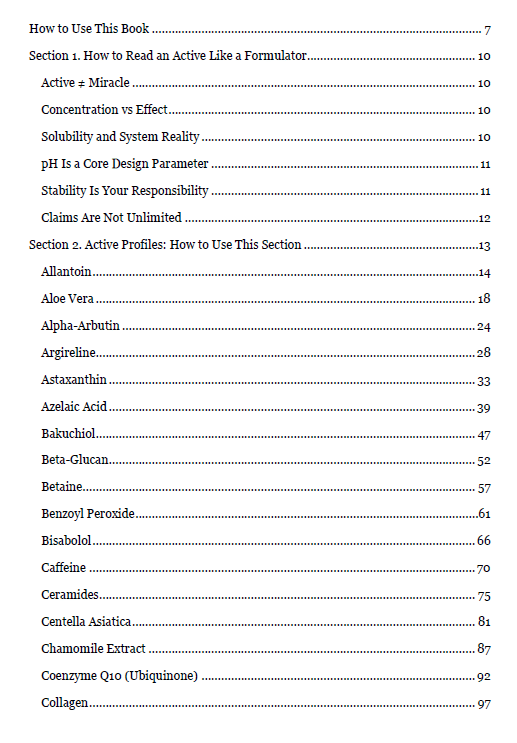
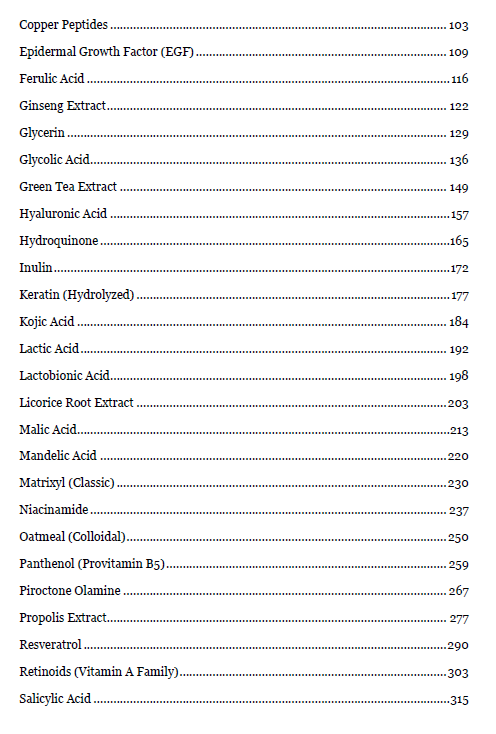
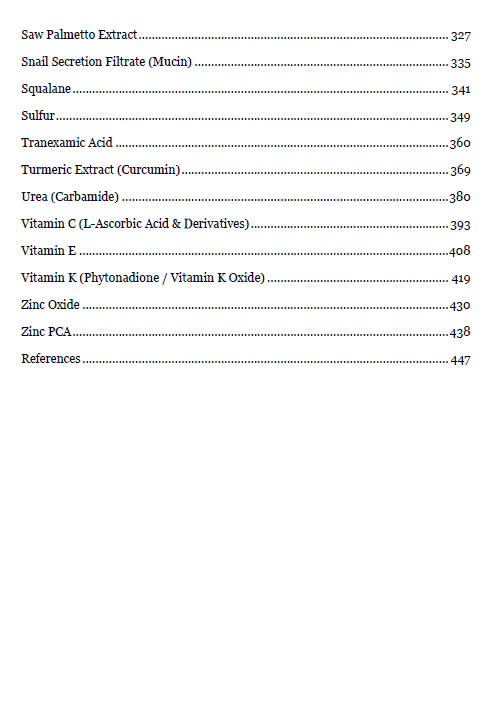
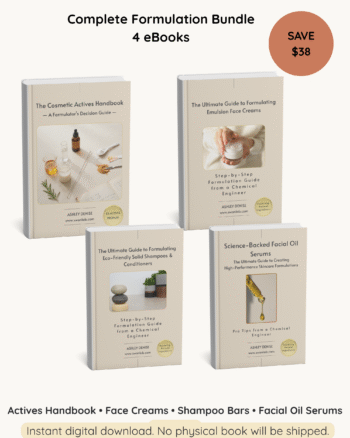
This is not a recipe book. This is not an ingredient encyclopedia. The Cosmetic Actives Handbook is a decision guide for the working formulator: 55 cosmetic actives profiled in 463 pages with the depth, nuance, and regulatory context that real product development demands.
What This Book Actually Delivers
Every active is profiled to answer one practical question: should this ingredient be in your formula, and if yes, how do you make it work? Each profile gives you:
- True mechanism of action, separated from marketing claims
- pH windows, solubility constraints, and real stability behavior
- Use levels backed by evidence, not by supplier marketing sheets
- Compatibility and conflicts with other actives in the same bottle
- Common formulation mistakes that wreck stability, sensorial profile, or efficacy
- Up-to-date regulatory positions across the EU, US, UK, and other key markets
- Hair and scalp considerations where relevant
- Honest formulator insight on what the active really delivers in finished products
The book opens with a foundational chapter, Section 1: How to Read an Active Like a Formulator, covering concentration vs effect, solubility and system reality, pH as a core design parameter, stability responsibility, and claim limits. This is the framework that separates beginners from real formulators.
What’s Inside
55 actives covered in full working detail, including:
Vitamin C and its full derivative family. Niacinamide. Retinoids. Salicylic Acid and Glycolic Acid with full buffer math. Azelaic Acid with multiple solubilization strategies. Tranexamic Acid. Alpha-Arbutin. Kojic Acid. Lactobionic Acid and the PHA family. Hyaluronic Acid. Ceramides. Peptides including Argireline, Matrixyl, and Copper Peptides. EGF. Bakuchiol. Centella Asiatica. Propolis. Snail Mucin. Zinc Oxide. Zinc PCA. Piroctone Olamine. Sulfur. Urea. Hydroquinone (regulatory context only). And many more.
Who This Book Is For
This book is written for people who already know what HLB means and want better answers, not basics:
- Indie cosmetic brand founders who own formulation decisions and need to evaluate raw material claims critically
- Junior to mid-level cosmetic chemists and formulators looking to deepen working knowledge across a wide active palette
- Product developers at small and mid-sized cosmetic companies handling ingredient selection
- R&D teams at contract manufacturers preparing technical files for client briefs
- Regulatory and quality professionals who want technical depth alongside compliance context
- Beauty industry educators and consultants who need a defensible reference to teach from
- Advanced home formulators with a chemistry background ready to move past beginner DIY content
Who This Book Is NOT For
Please save your money if any of the following describes you. This book will not deliver what you are looking for:
- Skincare consumers looking for product recommendations or daily routine advice
- Complete beginners with no chemistry vocabulary (you will be lost in the first few sections)
- People wanting ready-to-use copy-paste recipes with exact percentages and procedures
- Anyone hoping for marketing-style coverage of trending TikTok ingredients
- Medical or pharmaceutical formulators (this book stays inside the cosmetic regulatory frame)
- Anyone looking for a quick list-style ingredient dictionary rather than a thinking framework
What Makes It Different
Most ingredient guides on the market fall into one of two traps: pretty but shallow consumer content dressed up as professional reference, or dense academic chemistry that never translates into formulation decisions. This handbook sits in the working middle. Technical enough to defend at a stability meeting. Practical enough to take to the bench tomorrow.
You will find honest treatment of topics most guides skip:
- Why some “natural” actives are mostly marketing, with the chemistry to prove it
- The “96% snail mucin” trick and similar concentration myths
- The actual science behind niacinamide flush mythology, including the Finholt and Higuchi hydrolysis kinetics
- Real BHA solubilization strategies with a decision tree for when to use which
- The post-2022 EU regulatory landscape on zinc pyrithione, salicylic acid, retinoids, and vitamin K oxide
- Buffer math for AHAs walked through step by step, and when you can skip the math entirely
- Why “anhydrous Vitamin C” works while “anhydrous peptide serum” usually does not
Format and Delivery
- Format: PDF, optimized for desktop and mobile reading
- Length: 463 pages
- Delivery: Instant download after purchase
- License: Single-user. Not for redistribution or resale.
A Note from the Author
I wrote this book because the reference I needed when I started serious formulation work did not exist. Pretty consumer-facing content was abundant. Academic chemistry textbooks were dense and disconnected from cosmetic reality. The middle ground, technical and practical, was missing. This is the book I wish I had on my desk fifteen formulations ago.
If you are the kind of formulator who wants to understand why a decision works rather than just copy what someone else did, this book was written for you.
— Ashley Denise


Reviews
There are no reviews yet.