

Why Solid Shampoo Bars Are on the Rise?
In recent years, solid shampoo bars have become more than just a trendy zero-waste alternative, they’ve evolved into a serious category in professional haircare formulation. With their long shelf life, reduced packaging, and travel-friendly format, they appeal not only to eco-conscious consumers but also to formulators seeking to craft efficient, high-performance products.
But here’s the catch: making a solid shampoo bar that actually works isn’t as simple as melting some oils with surfactants and pouring them into a mold. It requires an understanding of surfactants, oil compatibility, and functional solid shampoo formulation principles.
Whether you’re an indie brand owner, a DIY enthusiast, or a beginner taking your first steps in cosmetic formulation, this guide will walk you through the basics, and show you why surfactants and oils are the true backbone of solid shampoo bar design.
What Makes a Shampoo Bar “Work”?
Solid shampoo bars may look like a cute little disc of soap but they’re not actually soap. Unlike traditional bar soaps made through saponification (which often have a high pH and can strip the hair), solid shampoo bars are formulated with mild surfactants, conditioning agents, and pH adjusters designed specifically for scalp and hair health.
Think of them as compact liquid shampoos, without the water or the waste.
A high-quality bar must cleanse the scalp without overdrying, rinse cleanly without residue, lather richly even with hard water, and stay solid through multiple uses.
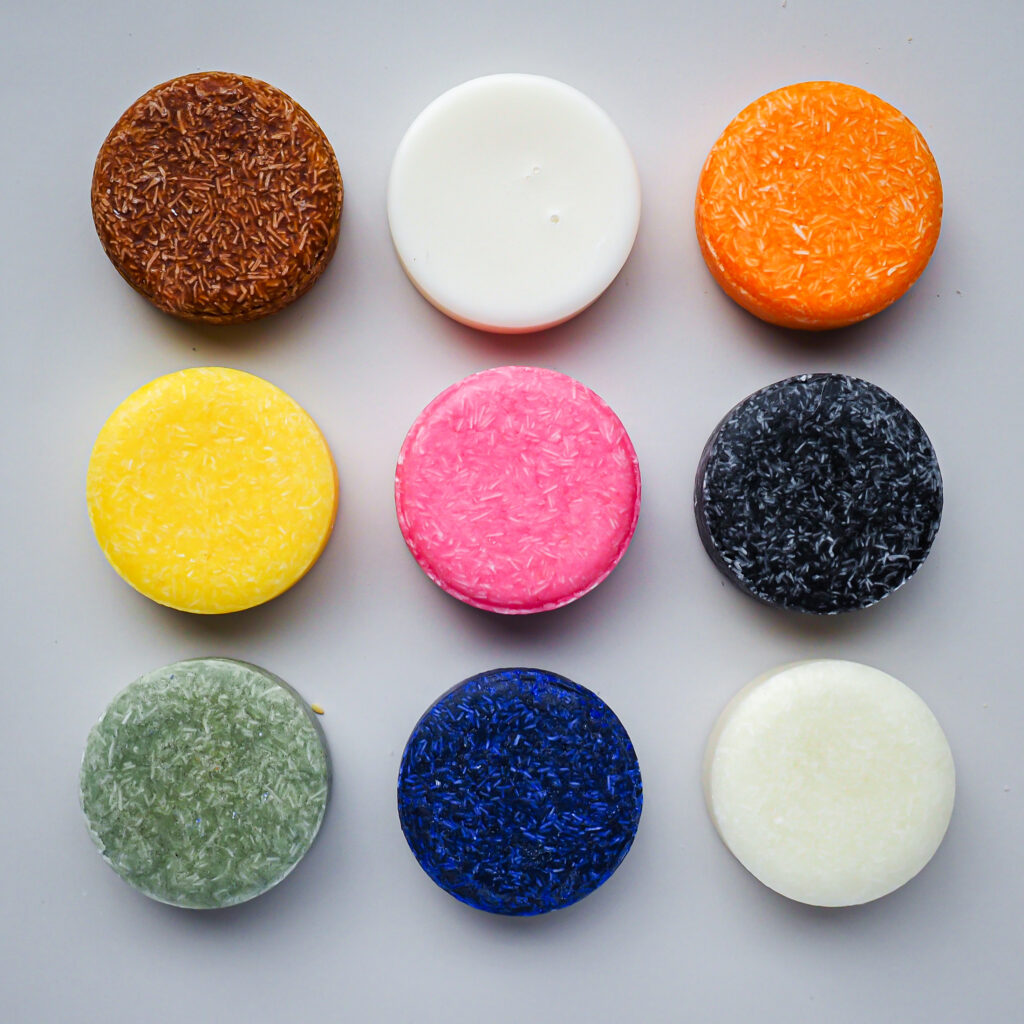
To achieve that, formulators blend ingredients with very specific functions:
Surfactants for cleansing and foam,
Butters and oils for nourishment,
Humectants for moisture retention,
Conditioning agents for smoothness and detangling,
pH adjusters for scalp compatibility.
The best bars are those where these ingredients don’t just coexist, they’re in harmony.
In the next sections, let’s break down the two most essential building blocks: surfactants and oils.
💡 Formulator’s Shortcut:
Understanding the chemistry is vital, but you don’t have to start from scratch. If you want to skip the trial-and-error phase and access lab-tested, sulfate-free (SCI) formulas that are ready to scale, check out my complete handbook.
Get the Professional Solid Shampoo & Conditioner Formulation Guide
The Role of Surfactants
Surfactants are the primary cleansing agents in any shampoo and in solid shampoo bars, they play an even bigger role. Unlike liquid shampoos, where surfactants are diluted in water, solid formats require carefully selected combinations of surfactants that can cleanse effectively without being too harsh on the scalp.
The most commonly used surfactants in solid bars are SCI (Sodium Cocoyl Isethionate), SCS (Sodium Coco Sulfate), and CAPB (Cocamidopropyl Betaine). Each has its own characteristics:
- SCI: Ultra mild, creamy foam, low irritation potential. Great for sensitive scalps.
- SCS: High foaming, strong cleanser, often combined with SCI for lather boost.
- CAPB: Amphoteric and mild, often used to soften the formula and reduce irritation.
- APG (Alkyl Polyglucosides): A family of ultra-gentle, non-ionic surfactants that boost foam and improve mildness. They are excellent co-surfactants, and you can learn more about using alkyl polyglucosides in solid shampoo bars in our detailed guide.
| Surfactant | Full Name | Function | Best For |
| SCI | Sodium Cocoyl Isethionate | Mild cleansing, creamy foam | Sensitive scalp, baby products |
| SCS | Sodium Coco Sulfate | High foaming, strong cleansing | Oily hair, volume bars |
| CAPB | Cocamidopropyl Betaine | Foam boosting, reduces irritation | All hair types (co-surfactant) |
| APG | Alkyl Polyglucosides | Ultra-gentle cleansing | Color-treated hair, sulfate-free bars |
Choosing the right surfactants (and balancing them well) affects everything from how your bar lathers to how gentle it feels on the skin. It’s not about using as many surfactants as possible, but about building synergy between function and feel.
The Role of Oils & Butters
In solid shampoo bar formulation, oils and butters are more than just emollients; they help define the entire sensory experience of your product. From the way the bar glides across wet hair to how nourished the scalp feels afterward, your oil phase plays a major role in texture, performance, and hair type suitability.
Every oil brings a unique fatty acid profile, and those profiles affect things like cleansing balance, conditioning, and rinse-off feel. For example:
- Coconut oil adds cleansing power but may be too stripping for dry hair types
- Shea butter offers rich nourishment and contributes to bar hardness
- Jojoba oil mimics the skin’s natural sebum, making it ideal for scalp care
- Argan oil provides light conditioning and shine without greasiness
When choosing oils and butters, it’s essential to match them not just to your brand aesthetic or ingredient philosophy, but to function, what does your target scalp and hair type actually need? Of course, topical application is only half the story; true hair vitality is also deeply linked to a comprehensive hair health and nutrition guide.
In our eBook, we break down the fatty acid composition, skin feel, absorption speed, and best use cases for each popular oil and butter, helping you formulate with intention, not guesswork.
Balancing Cleansing & Conditioning
One of the trickiest parts of formulating solid shampoo bars is finding the right balance between cleansing and conditioning. Too much cleansing power, and you risk leaving the hair dry and squeaky. Too much oil or butter, and the bar may feel greasy, weigh the hair down, or even leave residue on the scalp.
This balance is influenced by:
- Your choice of surfactants (harsh vs. mild, foaming vs. creamy)
- Oil and butter content (how much and what type)
- Additives like cationic conditioning agents, esters, or humectants
- pH level (especially important for cuticle closure and shine)
🧴 Important Note on Conditioning Agents
While adding conditioning agents to a shampoo bar is effective, formulating a dedicated conditioner bar is a separate science. We explore this in depth in our complete guide to solid hair conditioner formulation.
Contrary to popular belief, oils and butters alone don’t condition the hair; they act as emollients, offering softness and slip. True conditioning comes from cationic ingredients like BTMS-50, which carry a positive charge.
Hair, especially damaged or wet hair, carries a slight negative charge. Cationic agents bind to the hair fiber through electrostatic attraction, helping smooth the cuticle, reduce static, and improve combability even after rinsing. This interaction cannot be achieved by oils alone.
💡 Formulation Tip:
Use oils for nourishment and texture, but include cationic emulsifiers or conditioning agents if you want your bar to truly condition the hair, not just make it feel nice in the shower.
Common Beginner Mistakes
Even with the best intentions, beginner formulators often run into a few common traps when crafting solid shampoo bars. While trial and error is part of the learning process, some mistakes can be avoided with the right foundational knowledge and a little guidance from cosmetic science.
Here are the most frequent pitfalls (and how to steer clear of them):
❌ 1. Treating Oils as Conditioning Agents
This is perhaps the most widespread misconception. While oils and butters provide nourishment and slip, they do not condition in the functional sense. Conditioning requires cationic ingredients that bind to the hair shaft and improve detangling, smoothness, and anti-static properties, something oils alone simply can’t do.
🛠 Fix: Include real conditioning agents like BTMS-50, Varisoft EQ 65, or Aminosensyl™ HC in your bar. These will do the heavy lifting when it comes to post-rinse softness and manageability.
❌ 2. Overloading the Oil Phase
More oils = more moisture? Not quite. Adding too many oils or butters can leave the bar greasy, reduce foam quality, and shorten shelf life due to potential rancidity. It also disrupts the surfactant system, leading to dull or heavy-feeling hair.
🛠 Fix: Stick to functional percentages: 5–10% oil phase is often more than enough when combined with proper surfactants and emulsifiers. Our eBook includes optimized formulas with breakdowns by hair type and climate.
❌ 3. Choosing Surfactants Based on Popularity, Not Function
Not all surfactants are created equal. Just because something is labeled “natural” or “mild” doesn’t mean it’s the right fit for your formula. For example, using only SCS might give great foam but could be too harsh on the scalp.
🛠 Fix: Learn the difference between anionic, amphoteric, and non-ionic surfactants, and how they interact in solid formats. Our guide walks through SCI, SCS, CAPB, and more. With usage ranges, pH behavior, and blend suggestions.
❌ 4. Ignoring pH and Preservation
Beginners often overlook the importance of pH in solid formulations. A bar with a pH above 7 can raise the hair cuticle, cause frizz, and disrupt the scalp’s natural balance. Another common misconception is that “solid = water-free = no need for preservation.” But here’s the catch: even though your product doesn’t contain water, it’s used with water, in the shower, with wet hands, and often stored in humid environments.
🛠 Fix:
Keep your pH between 4.5 and 5.5 for scalp health and optimal hair shine.
Also, understand the difference between two important protectives:
- Antioxidants (like vitamin E or rosemary extract) help prevent oxidation, they stop oils from going rancid, preserving smell, texture, and performance.
- Preservatives (like ethylhexylglycerin or sodium benzoate) protect against microbial contamination, which can still occur when wet fingers repeatedly touch the bar or it sits in a damp shower tray.
Even in anhydrous systems, this “wet use” exposure means it’s wise to include preservation strategies, especially when using unrefined oils, botanical extracts, or other sensitive ingredients.
❌ 5. Using the Same Formula for All Hair Types
Not all bars are one-size-fits-all. Curly, oily, color-treated, fine, or sensitive scalps all have different needs and your formulation should reflect that.
🛠 Fix: In our eBook, you’ll find adjustable frameworks to tailor your base formula for different hair types. Ingredient choice matters, but so does ratio, surfactant strength, and conditioning level.
✨ The good news?
These mistakes are 100% avoidable and our Solid Shampoo & Conditioner eBook exists to help you bypass years of trial and error with proven formulas, science-backed explanations, and flexible templates that actually work.
💡 Ready to Start Formulating Like a Pro?
This eBook gives you everything you need to confidently create your own solid shampoo & conditioner bars; from beginner-friendly theory to expert-grade recipes.
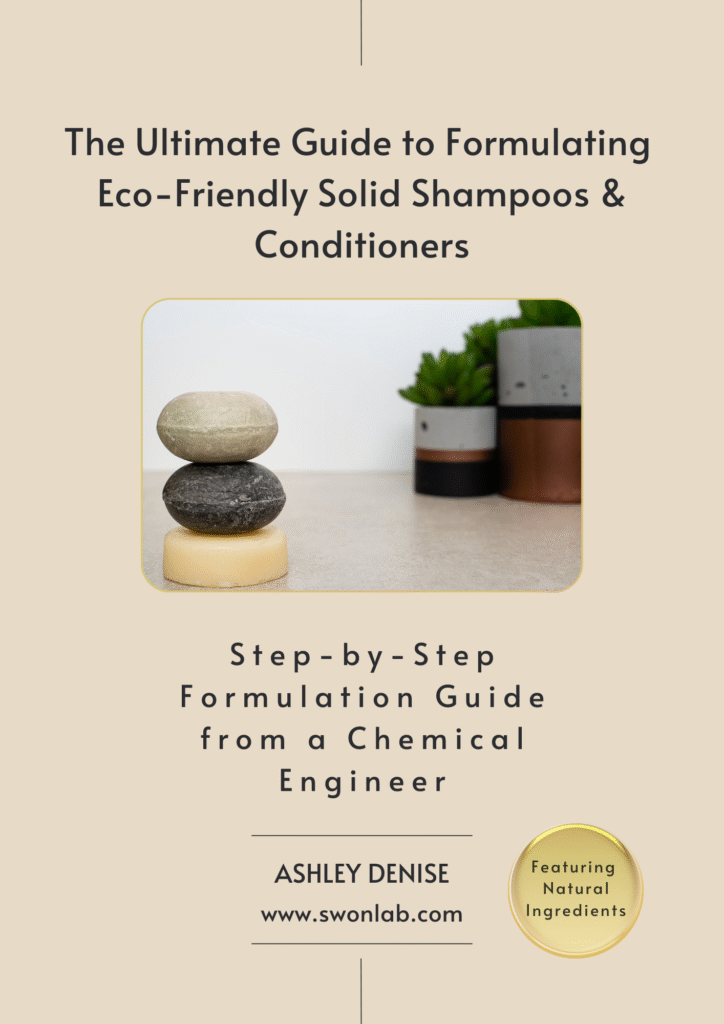
Solid Shampoo & Conditioner Bar Formulation Guide
Create solid shampoo and conditioner bars with confidence.
No more guesswork, failed batches, or endless ingredient research.
Learn the exact methods and pro techniques used by real cosmetic formulators.
Master the science of pH-balanced, syndet (soap-free) solid shampoo and conditioner bars.
This 174-page guide, written by a Chemical Engineer, gives you 7 complete professional formulas with full INCI tables (4 shampoo bars including anti-dandruff, 3 conditioner bars with BTMS-50, Varisoft EQ 65, and AminoSensyl™ HC), ingredient deep-dives (surfactants, BTMS, actives, oils…), and step-by-step process (cold and hot) to stop the guesswork and start creating bars that truly perform.
Beginner-friendly, eco-conscious, and results-driven.
- 🔍 Includes ingredient breakdowns, pH guidance, surfactant combos, conditioning systems, and cold/hot process methods… all tested and ready to use.
- 📥 Instant download • Lifetime access • No fluff, just science
- 👉 Formulate smarter. Skip the trial-and-error. Get your copy now.